

Living in Toronto for the better part of a decade, I’ve often found myself walking past the massive glass-and-steel structure nestled at the base of the CN Tower without actually going inside. Like many locals, I tended to view the area around Bremner Boulevard as “tourist territory”—a place where the sidewalks are crowded, and the pace is set by people looking up at the skyline rather than those of us rushing to a meeting.
However, on a particularly grey, slushy Tuesday in November, I decided I needed an escape from the city’s concrete grind. I wasn’t looking for a thrill; I was looking for a change of perspective. I decided to finally step inside Ripley’s Aquarium of Canada, not as a tourist, but as a resident looking for a bit of underwater zen. What I expected was a standard walkthrough of fish tanks; what I found was a surprisingly deep, meditative experience that made me feel like I’d left Toronto entirely without ever leaving the downtown core.
Why This Place Is Worth Visiting
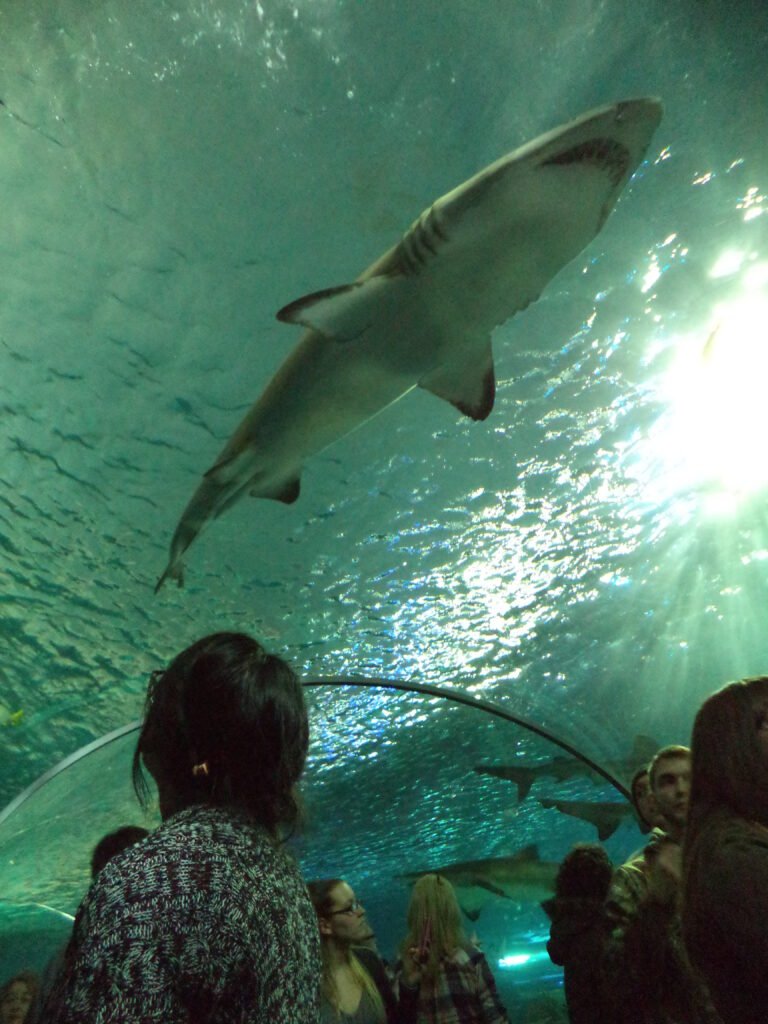
There is a distinct difference between seeing marine life on a screen and standing inches away from a sand tiger shark as it glides overhead. Ripley’s Aquarium matters because it provides a tactile connection to a world that feels completely alien to our urban lives.
What makes it feel different in person is the sheer scale of the engineering. When you are inside the “Dangerous Lagoon,” you aren’t just looking at water; you are submerged in 2.5 million liters of it. The curve of the glass and the way the light refracts creates an immersive environment that feels remarkably still, despite the thousands of people who pass through daily.
For Families: It is an obvious win. The “Touch Tanks” and interactive displays keep kids engaged for hours.
For Solo Travelers: It is a surprisingly good place for introspection. If you go during off-peak hours, the low lighting and bubbling water sounds are incredibly grounding.
For Photographers: The “Planet Jellies” gallery offers some of the most surreal, backlit opportunities for abstract photography in the city.



What to Know Before Visiting (From Experience)
After spending a full afternoon exploring every nook and cranny, here are the honest realities of the experience that you won’t find in a brochure:
-
The Best Time to Visit: I cannot stress this enough—go early or go late. I arrived at 10:00 AM on a weekday and had about 45 minutes of relative peace before the school groups arrived. If you can’t do a weekday morning, try the “Sharks After Dark” hours (usually after 7:00 PM). The vibe changes completely; it becomes quieter, darker, and much more intimate.
-
Crowd Levels: On weekends, this place is a beehive. If you are sensitive to noise or tight spaces, a Saturday afternoon might feel more stressful than relaxing.
-
One Small Inconvenience: The price of the cafeteria food. While it’s convenient, you are paying “entertainment district” prices for fairly standard fare. I’d recommend eating a hearty meal before you head in.
-
What Surprised Me: How cold it can get in certain galleries. To keep the water and the environment stable, the air conditioning is quite robust. Even in the summer, I’d suggest bringing a light sweater.
-
One Thing I Wish I Knew: The “moving sidewalk” in the shark tunnel actually has a stationary path right next to it. If you want to stop and stare at a specific turtle or shark for ten minutes, stay off the belt! I spent my first five minutes feeling rushed by the machinery before I realized I could just stand to the side.
-
Location:
288 Bremner Boulevard
Toronto, Ontario M5V 3L9
Getting There (A Local’s Perspective)
If you are visiting Toronto, your instinct might be to rent a car. Don’t. The Aquarium is located in the heart of the South Core, and parking here is both expensive and a logistical headache. I’ve seen people spend forty minutes just trying to exit a parking garage after a Blue Jays game or a busy Saturday.
My Recommendation: The TTC or GO Transit
I took the subway to Union Station. From there, you don’t even have to go outside if the weather is bad. You can follow the signs for the SkyWalk, an indoor elevated walkway that leads you directly from the station to the base of the CN Tower and the Aquarium entrance. It’s about a 10-minute walk, but it’s climate-controlled and offers great views of the rail lands.
If you are coming from outside the city, the GO Train is your best friend. Union Station is the hub for all transit, making the Aquarium one of the most accessible spots in Ontario.
My Personal Experience: A Deep Dive into the Blue
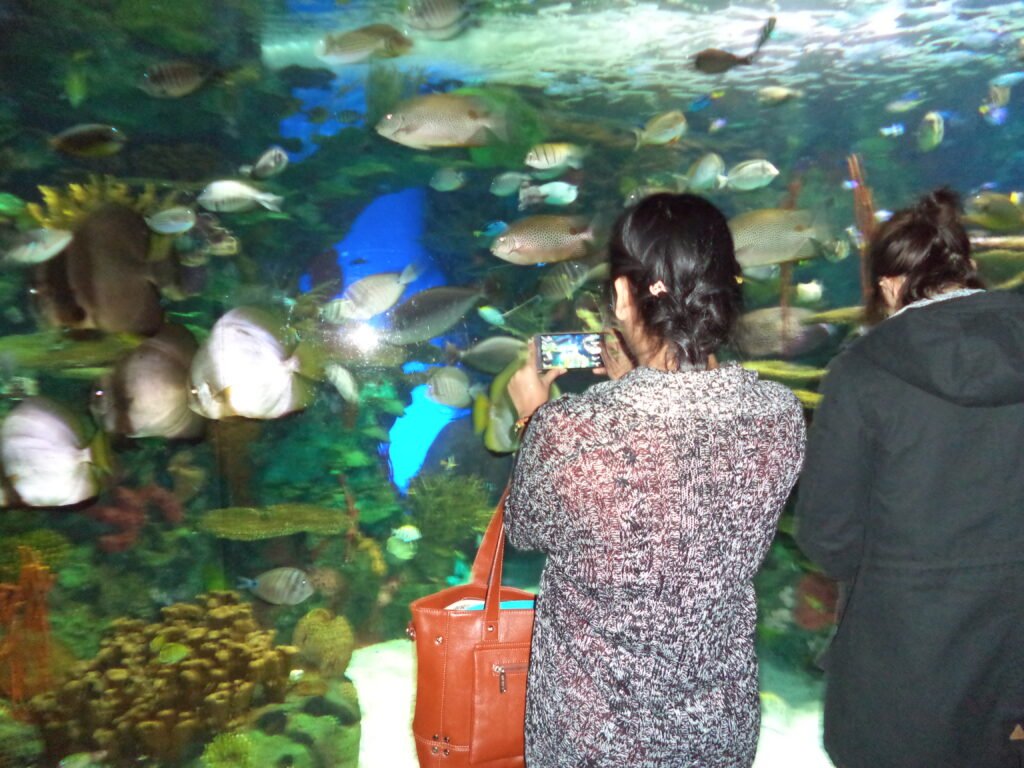
Walking through the doors, the first thing that hit me wasn’t the sight of fish, but the sound. There’s a constant, rhythmic hum of filtration systems and the muffled echoes of excited voices. It creates a sort of “white noise” that eventually makes the rest of the city fade away.
The Canadian Waters Gallery
I spent a surprising amount of time in the first section, which focuses on local species. Usually, we think of “exciting” sea life as something from the tropics, but seeing massive Lake Ontario Salmon and prehistoric-looking Paddlefish made me realize how little I knew about the water in my own backyard. The lighting here is moody and cool, reflecting the deep blues of the Great Lakes.
The Dangerous Lagoon
This is the centerpiece, and rightfully so. It’s a long, winding acrylic tunnel. As I stepped onto the moving walkway, I felt a genuine sense of awe. Watching a Green Sea Turtle—her name is Scout, I believe—swim directly over my head was a highlight. There is something deeply humbling about seeing a creature that large move with such effortless grace. I ended up riding the moving sidewalk three times in a row just to catch different angles of the sawfish and the sharks.
The Emotional Impact
About two hours in, I found myself in the Planet Jellies section. This area is essentially an art installation. The walls are lined with circular tanks where jellyfish drift like ghosts, illuminated by color-changing LED lights. I sat on a bench here for twenty minutes. In the middle of a busy workday, in the middle of Canada’s largest city, I found a pocket of total silence. That was the moment the experience shifted from “sightseeing” to “recharging.”
I stayed for a total of two and a half hours. By the time I walked back out into the bright Toronto afternoon, the city felt a little less frantic.
Things Many Visitors Miss
If you’re planning a trip, keep an eye out for these smaller details that often get overlooked in the rush to see the sharks:
- The Engineering Windows: Periodically, you’ll find small windows or plaques that show the massive life-support systems—the pipes, the pumps, and the salt-mixing vats. It’s a fascinating look at the “magic” behind the curtain.
- The Kelp Forest Wave Maker: In the Canadian Waters section, look at the top of the kelp tank. You can see the mechanical arms creating the surge and swell. It’s hypnotic to watch how the plants react to the artificial current.
- The Quiet Corner: Near the end of the Rainbow Reef, there’s a small area with some seating that looks back into the main reef tank. Most people rush past this to get to the gift shop, but it’s one of the best spots for a quiet photo without someone’s head in the frame.
- The Octopus Camouflage: The Giant Pacific Octopus is a master of disguise. Most people walk by his tank thinking it’s empty. Spend at least three minutes looking at the rocks; eventually, you’ll see a “rock” breathe or shift its color.
Nearby Places to Visit or Eat
Since the Aquarium is centrally located, you should definitely pair it with other local spots to make the most of your day.
Attractions
-
The Rec Room: Directly across from the aquarium entrance. It’s a massive arcade and social hub. It’s great if you have leftover energy and want to play some vintage Skee-Ball.
-
Roundhouse Park: Right outside the doors. It’s home to the Toronto Railway Museum. Even if you don’t go inside the museum, walking among the old locomotives in the park is free and great for photos.
-
The CN Tower: Obviously, it’s right there. If it’s a clear day, the “Sea the Sky” combo ticket can save you a bit of money.
Where to Eat
-
Amsterdam BrewHouse (Waterfront): A 10-minute walk south to the lake. They have a massive patio and great local beer. It’s a classic Toronto experience to sit by the water after being “under” it.
-
Pai Northern Thai Kitchen: About a 15-minute walk north on Duncan St. This is a local favorite. It’s busy, loud, and serves some of the best Thai food in the country. It’s the perfect “real Toronto” contrast to the tourist-heavy South Core.
Cost, Tickets & Time Needed
-
Approximate Cost: Expect to pay between $45 and $55 CAD for an adult ticket. Prices fluctuate slightly based on peak times and whether you buy online.
-
Advance Booking: This is essential. They use timed-entry slots. If you just show up at the door on a Saturday, you might be told the next available slot is three hours away.
-
Time Needed: I’d recommend a minimum of 2 hours. If you have kids or are a photography enthusiast, plan for 3 to 4 hours.
-
Is it worth the money? Honestly, yes. While it’s one of the more expensive attractions in Toronto, the quality of the exhibits and the maintenance of the facility are world-class. It doesn’t feel like a “trap”; it feels like a premium experience.
Frequently Asked Questions (FAQ):
- Is this place good for kids?
Absolutely. It is arguably the most kid-friendly attraction in the city, with plenty of low-level viewing windows and tactile exhibits.
- Is it worth visiting in winter?
Yes! In fact, I prefer it in the winter. It’s one of the best ways to escape a Toronto snowstorm and feel like you’re in a tropical environment for a few hours.
- Is it accessible?
Very. The entire facility is designed with ramps and elevators. The moving sidewalk in the Dangerous Lagoon is wheelchair accessible as well.
- Is it crowded?
Yes, especially between 11 AM and 4 PM. To avoid the worst of it, aim for the first hour of opening or the last two hours before closing.
- Can locals still enjoy it?
Definitely. I’ve lived here for years and still found it captivating. The trick is to go with the intention of slowing down, rather than just “checking it off” a list.
- Do I need to bring anything specific?
A reusable water bottle (there are refill stations) and a camera with good low-light capabilities. Avoid using flash, as it reflects off the glass and can stress the animals.
Final Personal Reflection
As I walked back out toward Union Station, the cold wind off Lake Ontario hitting my face, I realized that my perception of this “tourist spot” had shifted. Ripley’s Aquarium isn’t just a place for families on vacation; it’s a sanctuary for anyone who needs a moment of quiet wonder in a city that rarely stops moving.
I would highly recommend this to anyone who appreciates nature and design, or anyone who just needs a break from their screen. However, if you are someone who absolutely despises crowds or is on a very tight budget, you might find the experience more frustrating than fulfilling.
My one honest takeaway? Don’t rush. The aquarium is designed to be a journey. If you let yourself stand still and just watch the jellies pulse or the sharks glide, you’ll find that the price of admission covers much more than just a look at some fish—it buys you a much-needed moment of peace.